
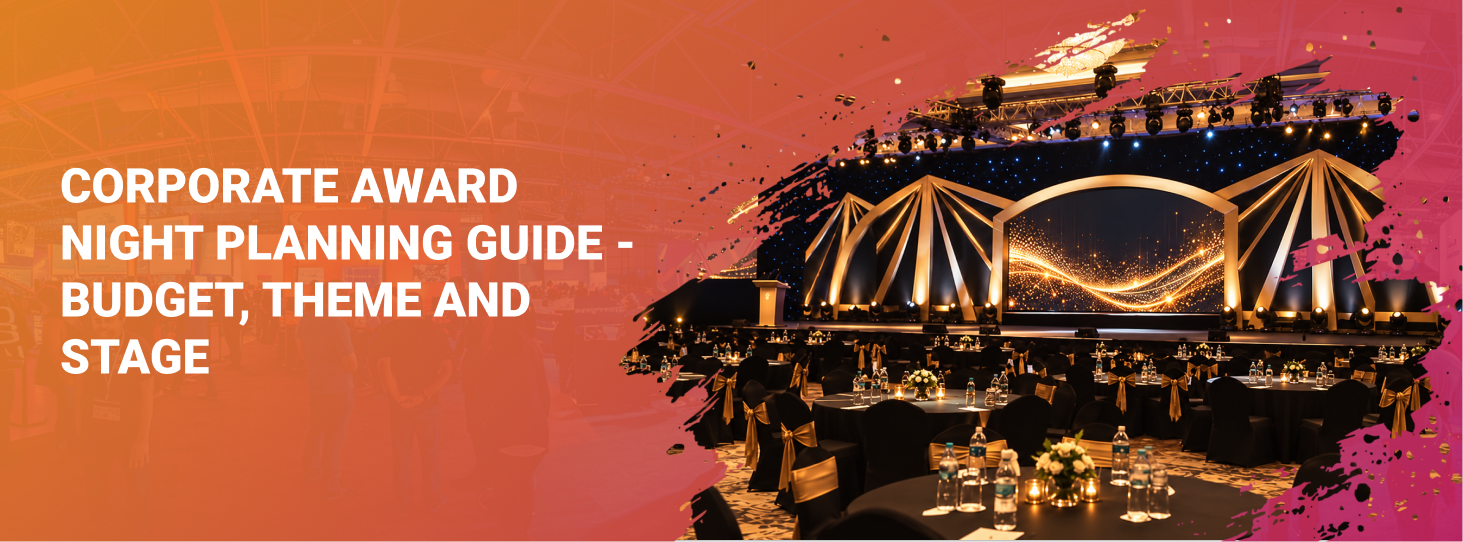
Corporate Award Night Planning Guide - Budget, Theme and Stage
What is the key to having an award night that is budget-friendly, keeps everyone entertained, and will make workers feel valued? Planning a corporate awards event is not a task that can be completed by simply hiring a venue and organizing trophies. It’s about organizing, celebrating, and making an evening that everyone will talk about long after!
Whether picking a theme, designing the stage, or managing the cost, each decision will impact the guest experience. A small business with only a few employees and business partners celebrating its yearly accomplishments will have different needs than a large business with hundreds of employees and business partners celebrating. But both require planning, budgeting, and attention to detail.
With the proper arrangement, firms can arrange fun events without the need of spending a lot of money. The following are some tips on how to tackle the main aspects of the planning process.
1. Start With the Purpose of the Event
Determine the event’s purpose before picking out decorations or getting quotes from vendors. Is the company celebrating a successful year, appreciating long-standing clients, recognizing employee performance and/or rewarding outstanding teams?
The purpose influences the way the event is organized, the people who participate, and its overall tone.
For instance, a technology firm that is celebrating its annual success could center on innovation, teamwork, and employee contributions. Senior executives and business partners might need to have a more formal awards presentation where speeches are made, a function dinner is served, and networking takes place.
Make a list of the main objectives, expected number of guests, and preferred event duration. The information will inform the venue, program, and budget decisions.
Also, it is vital to know your audience. An informal evening with entertainment may be desirable for employees, whereas a more formal program may be desired by clients and industry leaders. The planning process is made easier, and the experience is more fitting when the event is reflective of its audience.
2. Set a Realistic Budget
One of the most important steps in budgeting should be the first, event costs can escalate rapidly. In addition to the venue, the companies might have to cover costs for catering, stage production, decorations, photography, entertainment, and award trophies.
Start with the total amount available and divide it into practical categories. Here is an example of how a company might allocate its event budget:
| Expense category | Suggested allocation |
|---|---|
| Venue and catering | 35% |
| Stage and audiovisual equipment | 20% |
| Decorations and branding | 10% |
| Awards and certificates | 10% |
| Entertainment | 10% |
| Photography and videography | 5% |
| Emergency expenses | 10% |
These figures are illustrative. The actual allocation will depend on the venue, guest count, and event requirements.
For instance, booking a hotel ballroom with an existing stage and sound system may reduce production costs. However, a large convention center might require additional lighting, screens, and technical support.
Request detailed quotations from different vendors before making a decision. Compare what each package includes rather than choosing the cheapest option immediately.
Keep some money aside for unexpected expenses, such as additional meals, last-minute printing or equipment changes. A contingency fund can prevent small problems from affecting the entire event.
3. Choose a Theme That Suits the Occasion
A theme creates a uniformity of colors and helps to plan invitations, decorations, stage visuals, and dress code. The selected option should be in the style of the company and match the nature of the event.
Let’s look at some ideas that you can consider.
Black-Tie Elegance: This is the best theme to use for formal occasions and events that involve senior leaders or business associates. Sophisticated atmospheres can be achieved by simple stage backdrops, coordinated lighting, and elegant table settings, without having to over-decorate.
Hollywood Red Carpet: A red-carpet entrance, photography wall, and spotlight effects can make an employee recognition evening feel more exciting. This theme works particularly well when the company wants to celebrate achievements in a lively setting.
Future of Innovation: Technology companies can use digital displays, geometric designs, and animated graphics to celebrate creativity and new ideas. The theme can also connect naturally with product launches and business milestones.
Around the World: Companies with international teams may choose a global theme featuring different cultures through table settings, music, or food. It offers a welcoming way to recognize the diversity of the workforce.
Once the theme is selected, keep the details consistent. The invitations, stage, table decorations, and presentation slides should complement one another. A well-coordinated design often looks better than a room filled with unrelated decorations.
4. Design a Stage That Makes Every Moment Count
The stage is where the main activities take place, from opening speeches to award presentations and performances. It should look attractive, but it must also be practical.
Begin by considering the venue size and the number of guests. A small stage may work for an intimate gathering, while a larger audience may need elevated platforms and screens to ensure everyone can see the presenters.
Pay attention to these essential elements:
- Backdrop: Display the event name and company branding clearly. Avoid adding too much text or too many decorative elements.
- Lighting: Use suitable lighting to highlight presenters and award recipients. Softer lighting can create an elegant atmosphere, while spotlights can add excitement during award announcements.
- LED screens: Display recipient names, award categories, photographs, and presentation slides. Check all content before the event begins.
- Sound system: Test microphones and speakers to ensure that announcements remain clear throughout the venue.
- Stage access: Leave enough room for presenters, recipients, and photographers to move comfortably.
For example, a company hosting an employee awards evening could use a simple branded backdrop, two LED screens, and focused lighting. This arrangement can look professional without requiring an elaborate stage structure.
The main goal is to make the people receiving recognition the centre of attention.
5. Select the Right Venue and Seating Arrangement
The venue affects the atmosphere, guest comfort, and overall cost. When comparing locations, consider capacity, accessibility, parking, catering facilities, and available technical equipment.
A hotel ballroom may suit a formal dinner, while a convention center may be better for a large event with elaborate stage production. Smaller organizations can consider private event spaces that offer a comfortable setting without the expense of a large venue.
Seating also deserves attention. Round tables encourage conversation during dinner, whereas theatre-style seating allows more guests to face the stage. A combination of both can work well when the program includes dinner, networking, and award presentations.
Before confirming a booking, visit the venue if possible. Check the stage view from different seats, inspect the entrances, and discuss installation timings with the venue team.
These simple checks help avoid problems on the event day.
6. Prepare an Engaging Event Program
A good program keeps the evening organized without making it feel rushed or unnecessarily long. Guests should have enough time to enjoy the ceremony, appreciate the award recipients, and interact with colleagues.
A sample four-hour schedule might look like this:
| Time | Activity |
|---|---|
| 6:00–6:30 PM | Guest arrival and registration |
| 6:30–6:45 PM | Welcome address |
| 6:45–7:15 PM | First award presentation |
| 7:15–7:45 PM | Dinner and networking |
| 7:45–8:15 PM | Employee and team awards |
| 8:15–8:35 PM | Entertainment or company highlights |
| 8:35–9:00 PM | Major awards and closing remarks |
| 9:00–10:00 PM | Informal networking and music |
Adjust the timings according to the number of awards and the audience size.
Choose award categories that reflect meaningful contributions. Examples include Employee of the Year, Outstanding Team Achievement, Customer Service Excellence, and Innovation Award.
Explain the selection criteria before nominations begin. Employees are more likely to appreciate the recognition when they understand how winners are chosen.
For example, an innovation award could recognize someone who improved an internal process or developed a practical solution to a customer problem. Sharing this achievement during the presentation makes the recognition more personal and meaningful.
Conclusion
Effective planning of corporate award night is a balanced combination of creativity, organizational skills, and money management. Every stage of preparation from the budgeting to stage design and vendors coordination should help you create the right atmosphere.
A properly planned award evening does not have to be expensive and fancy. The most important elements are real achievements recognition, comfortable atmosphere, and smooth event execution.
Ready to organize the next awards ceremony? Contact Dream Events to turn your ideas into a planned, creative and properly arranged event. Make the next corporate award night unforgettable.
Frequently Asked Questions (FAQs)