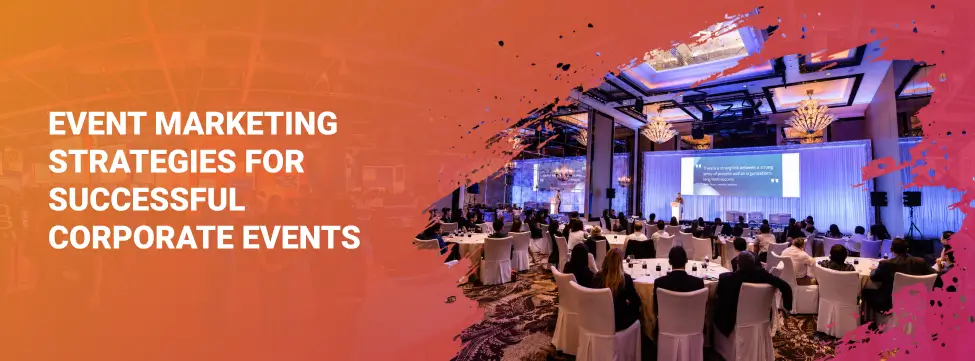
Event Marketing Strategies for Successful Corporate Events
Some corporate events become industry talking points, while others struggle to create engagement even with large budgets and premium venues.
This is often due to how strategically the event is marketed before, during, and after execution. Modern corporate events are no longer just networking gatherings or product showcases.
Businesses now use events as high-impact marketing channels to generate leads, position their brands as authorities, build partnerships, and create immersive customer experiences. Did you know that 77% of marketers consider live events one of the most effective marketing channels for business growth.
Today’s audiences expect personalization, interactive experiences, and valuable industry insights. Whether it is a leadership summit, B2B conference, trade show, product launch, or hybrid event, the right marketing strategy can significantly improve registrations, engagement quality, and long-term ROI.
What Is Event Marketing?
Event marketing is the process of promoting and positioning an event to attract the right audience, increase engagement, and achieve business objectives.
It combines branding, audience targeting, content marketing, digital promotion, networking engagement, and post-event nurturing to maximize event success.
For example, a technology company hosting an AI conference may promote keynote discussions, exclusive networking opportunities, and live product demonstrations months in advance to build anticipation among decision-makers and industry leaders.
Strong event marketing strategies help businesses turn events into long-term growth opportunities rather than one-time gatherings.
Top Event Marketing Strategies for Successful Corporate Events
Successful corporate events require strategic promotion, audience engagement, and personalized experiences to ensure events generate real business impact.
The following event marketing strategies help companies increase registrations, boost attendee engagement, enhance brand visibility, and maximize return value from corporate events.
Create Exclusive “Invite-Only” Networking Experiences
One of the most effective modern event marketing strategies is creating exclusivity around the event experience. Corporate audiences are more likely to engage with events that feel premium and professionally curated.
Instead of promoting events as open gatherings, businesses can position certain sessions or networking opportunities as invite-only experiences for decision-makers, CXOs, or industry leaders.
For example, a fintech conference may offer a private investor networking dinner exclusively for banking executives and startup founders. This creates perceived value while attracting high-quality attendees.
Use Thought Leadership Content Before the Event
Modern attendees register for events that provide industry value, not just promotional messaging. Businesses can build stronger event credibility by releasing educational content weeks before the event begins.
This content may include:
- Industry trend reports
- Executive interviews
- LinkedIn thought leadership posts
- Speaker opinion articles
- Short expert video clips
For example, before a manufacturing leadership summit, organizers may publish content discussing AI-powered production systems, smart factory trends, or supply chain automation challenges.
This approach positions the event as an industry knowledge platform rather than just a conference.
Build Personalized Event Journeys for Different Attendees
One-size-fits-all marketing campaigns no longer work effectively for corporate events. Different attendee groups have different goals, expectations, and professional interests.
Businesses should personalize event communication based on audience segments such as:
- CEOs and founders
- Investors
- Enterprise buyers
- Industry consultants
- Technology leaders
- Procurement teams
For example, a SaaS event targeting enterprise companies may send product-focused communication to IT buyers while sending networking-focused invitations to startup founders and investors. Personalized attendee experiences significantly improve engagement and participation rates.
Use LinkedIn Employee Advocacy Campaigns
Instead of relying only on official company pages, businesses should encourage leadership teams, speakers, sales teams, and employees to actively promote the event on LinkedIn.
This strategy increases organic reach because people engage more with personal professional profiles than branded pages.
For example, if keynote speakers share behind-the-scenes preparation videos, industry insights, or session previews from their personal LinkedIn accounts, the event gains stronger authenticity and professional visibility.
Employee advocacy campaigns are particularly effective for B2B events because they create trust-driven engagement within industry communities.
Create Interactive Pre-Event Engagement Activities
One of the most overlooked event marketing strategies is audience engagement before the event actually begins.
Instead of waiting until the event day, businesses can create interactive experiences in advance through:
- Industry polls
- Live Q&A sessions
- Mini webinars
- Networking forums
- Speaker AMA sessions
- Community discussion groups
For example, before a digital marketing summit, organizers may host a LinkedIn Live discussion on AI in advertising trends featuring guest speakers from the upcoming event.
This keeps audiences engaged while building stronger anticipation. Pre-event interaction also helps attendees feel more connected and invested before arriving at the event.
Introduce Hybrid and Digital Networking Experiences
Modern corporate audiences value flexibility. Hybrid event experiences allow businesses to attract both physical and virtual attendees while expanding overall event reach.
Successful hybrid event marketing focuses on creating meaningful digital engagement instead of simply livestreaming sessions.
For example, businesses can offer virtual breakout rooms, AI-powered networking recommendations, interactive live chat sessions and on-demand content access.
A global business summit may allow international attendees to join virtual networking sessions with speakers and exhibitors even if they cannot attend physically.
Use FOMO-Based Marketing Campaigns
Fear of Missing Out (FOMO) marketing has become highly effective for corporate events, especially on social media and LinkedIn.
Businesses can create urgency through:
- Limited-seat announcements
- VIP access campaigns
- Countdown posts
- Behind-the-scenes content
- Speaker reveal campaigns
- Real-time attendee updates
For example, announcing that “Only 50 executive networking passes remain” creates urgency and encourages faster registrations. Similarly, sharing live event setup videos, celebrity speaker arrivals, or attendee interactions creates excitement around the event experience.
Turn Attendees Into Brand Ambassadors
One of the most unique event marketing strategies is encouraging attendees to become part of the event promotion process.
Businesses can create branded social media zones, interactive booths, photo walls, and live engagement activities that motivate attendees to share their experiences online.
For example, technology expos often install immersive demo zones where attendees record videos or take branded photos for LinkedIn and Instagram.
Some events also gamify engagement by rewarding attendees for posting event content. participating in networking activities and attending breakout sessions.
User-generated content significantly improves organic event reach and brand credibility.
Use Post-Event Content Repurposing
Most businesses stop marketing after the event ends, which is a major missed opportunity. High-performing corporate events continue generating value long after completion through strategic content repurposing.
Businesses can convert event content into:
- LinkedIn articles
- Webinar recordings
- Podcast episodes
- Industry reports
- Speaker highlights
- Social media reels
- Blog content
For example, keynote discussions from a cybersecurity summit can later become gated downloadable reports for lead generation campaigns. Repurposed content extends event visibility while improving long-term marketing ROI.
Conclusion
Corporate events have evolved into powerful business growth platforms that influence brand positioning, customer engagement, networking opportunities, and lead generation. However, event success depends heavily on how effectively the event is marketed across different audience touchpoints.
At Dream Events & Services, we help businesses create impactful corporate events through strategic event marketing, audience engagement, event support, and end-to-end solutions designed to maximize business growth and event success.
Frequently Asked Questions (FAQs)
Event marketing strategies are promotional and engagement techniques used to increase event visibility, improve attendee participation, and generate business outcomes from corporate events.
Personalized experiences improve attendee engagement by delivering more relevant networking opportunities, sessions, and communication based on audience interests.
LinkedIn helps businesses target professionals, decision-makers, and industry leaders directly through thought leadership content, sponsored campaigns, and employee advocacy.
Hybrid event marketing promotes both physical and virtual event experiences, allowing businesses to engage wider audiences across multiple locations.
Pre-event engagement builds anticipation, improves attendee interest, and creates stronger audience connection before the actual event begins.
Businesses can improve post-event ROI through follow-up campaigns, lead nurturing, content repurposing, attendee engagement, and ongoing relationship building.