
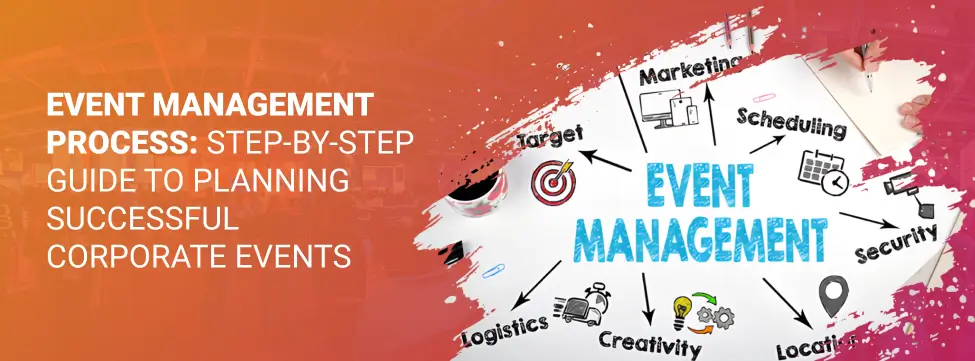
Event Management Process: Step-by-Step Guide to Planning Successful Corporate Events
We all thought that organizing a corporate event would be simple, like booking a venue, inviting people, and everything would fall into place. But suddenly it was juggling vendors, sponsors, speakers, registrations, and last-minute changes. And the main question always is, where to even start?”
Many professionals underestimate how complex corporate event planning can be. In fact, industry studies show that over 70% of event planners say logistics and coordination are the biggest challenges in organizing corporate events. From managing budgets to ensuring attendees have a memorable experience, there are dozens of moving parts.
This is exactly where a well-structured event management process becomes essential. When you follow a clear process, planning becomes more organized, teams collaborate better, and the chances of event success increase dramatically.
In this guide, we will walk through a step-by-step event management process used by professional event planners to plan successful corporate events.
Understanding the Event Management Process
Before diving into the steps, let’s answer a simple question: What exactly is the event management process?
The event management process refers to a structured workflow used to plan, organize, execute, and evaluate events efficiently. Instead of handling tasks randomly, planners follow a systematic approach that ensures every aspect of the event is handled professionally.
Think about it this way. If you were launching a new product event for your company, would you start by designing invitations or choosing the venue first? Or would you begin by defining the event objective?
Without a process, teams often waste time, overspend budgets, or miss critical tasks.
A clear event management process ensures:
- Every task is scheduled and tracked
- Stakeholders understand their responsibilities
- Risks are minimized
- The attendee experience remains consistent
Now let’s explore the steps involved in planning a successful corporate event.
Step 1: Define the Event Goals and Objectives
The first and most important step is understanding why the event exists. Many organizations start planning logistics before defining their purpose. But successful planners always begin with strategy.
Ask yourself a few key questions:
- What is the main objective of this event?
- Are we launching a product, generating leads, or strengthening client relationships?
- Who is the target audience?
- What does success look like?
For example, imagine a SaaS company hosting a technology conference. Their primary goal might be to generate qualified leads and showcase product innovations. This goal will influence everything, from the speakers invited to the type of sessions planned.
Similarly, a company hosting a customer appreciation event would focus more on experience, networking, and brand engagement.
Clearly defined goals help guide the entire event management process, ensuring that every decision aligns with the event’s purpose.
Step 2: Budget Planning and Resource Allocation
Once the objectives are clear, the next step is determining the budget. Budget planning is not just about estimating expenses. It’s about making strategic decisions on where to invest resources for maximum impact.
Typical corporate event budgets include costs such as:
- Venue and logistics
- Catering and hospitality
- Technology and AV equipment
- Marketing and promotions
- Guest speakers or entertainment
- Event management services
For example, consider a company hosting a 500-person industry networking event. If networking is the main focus, it might invest more in venue layout, hospitality areas, and interactive experiences rather than elaborate stage production.
Many planners recommend allocating 10 to 15% of the budget for unexpected expenses, because last-minute changes are common in events.
Have you ever attended an event where the sound system failed or sessions started late? Often these problems occur because planners did not even allocate resources properly.
Effective budgeting ensures the event management process runs smoothly without financial surprises.
Step 3: Create a Detailed Event Plan
Once the strategy and budget are ready, it’s time to build the event blueprint. This stage transforms ideas into actionable plans. A detailed event plan outlines timelines, responsibilities, vendors, and deliverables.
- At this point, planners ask practical questions such as:
When should invitations be sent? - Who manages speaker coordination?
- When should marketing campaigns start?
- Which vendors handle catering, staging, and branding?
For example, if you are organizing a corporate leadership summit, the event plan may include speaker onboarding timelines, session scheduling, guest registration systems and marketing promotions.
The goal here is to eliminate uncertainty. Every stakeholder from vendors to internal teams should know exactly what needs to be done and when.
Without proper planning, teams often face confusion and overlapping responsibilities. A strong event plan ensures the entire event management process moves forward efficiently.
Step 4: Venue Selection and Vendor Coordination
The venue plays a major role in shaping the event experience.
But choosing a venue requires evaluating multiple practical factors such as capacity, accessibility, technology infrastructure, and location convenience.
Imagine hosting a corporate training seminar in a venue that lacks proper audio-visual equipment or Wi-Fi connectivity. The entire event experience would suffer.
When selecting a venue, planners usually consider:
- Audience size and seating arrangements
- Transportation accessibility
- Technical requirements
- Branding possibilities
- Catering services
After finalizing the venue, the next step is vendor coordination. Events rely heavily on multiple vendors including catering teams, audio-visual technicians, decorators and production teams and registration and ticketing platforms
Managing these vendors effectively is a crucial part of the event management process. Communication must be clear, timelines must be aligned, and contracts must define responsibilities.
Professional event managers often conduct pre-event walkthroughs with vendors to ensure everything is prepared before the event day.
Step 5: Event Marketing and Promotion
Even the best-planned event can fail if people don’t attend. This is why marketing plays a vital role in corporate event success. But event promotion requires a targeted strategy to reach the right audience. For example, if a company is organizing a B2B technology conference, the marketing strategy might include:
- LinkedIn campaigns targeting industry professionals
- Email marketing for existing customers
- Partnerships with industry associations
- Media coverage in business publications
Another example is product launch events. These often rely on influencers, media outreach, and teaser campaigns to generate excitement before the event.
Ask yourself: How will potential attendees discover your event? Promotion strategies must begin weeks or even months in advance to maximize registrations and attendance.
Step 6: Event Execution and On-Site Management
This is the moment when months of planning come to life.
Event execution involves managing operations during the event to ensure everything runs according to schedule.
On the event day, planners focus on guest registrations and check-ins, stage and session coordination, speaker management and technical support
For instance, at a corporate networking event, the organizing team must ensure guests are welcomed smoothly, sessions begin on time, and networking areas remain active.
Unexpected issues are common during events. A speaker may arrive late, technology may malfunction, or guest numbers may exceed expectations.
The difference between average and successful events often lies in how efficiently teams respond to these challenges. Strong coordination during this phase ensures the event management process delivers the experience promised to attendees.
Step 7: Post-Event Evaluation and Feedback
Once the event ends, the work isn’t over yet. The final step involves analyzing results and identifying improvement opportunities. Post-event evaluation helps answer important questions:
- Did the event achieve its objectives?
- How satisfied were attendees?
- What worked well and what needs improvement?
Organizations often collect insights through attendee feedback surveys, engagement analytics, social media mentions and lead generation reports.
For example, if a company organized a sales conference, the success metrics may include the number of leads generated or partnerships initiated.
Post-event analysis ensures each future event becomes more effective than the last.
Conclusion
Corporate events succeed through preparation, coordination, and thoughtful execution. When planners follow a structured event management process, every stage becomes more manageable, from defining objectives and managing vendors to executing the event and analyzing its impact afterward.
There is a well-known proverb: “Well begun is half done.” In event planning, this couldn’t be more accurate. But organizing corporate events requires time, expertise, and strong coordination with multiple stakeholders.
At Dream Events and Services, we specialise in creating seamless, engaging, and result-driven corporate events. Our experienced team manages every stage of the planning journey, ensuring your event runs smoothly while you focus on building relationships and achieving business goals.
Frequently Asked Questions (FAQs)
The event management process is a structured approach used to plan, organize, execute, and evaluate events. It includes steps such as defining goals, budgeting, planning logistics, marketing the event, managing operations, and analyzing results.
Corporate events involve complex logistics, multiple stakeholders, and significant budgets. Following a structured process helps reduce risks, improve coordination, and ensure a successful attendee experience.
Planning timelines vary depending on event size. Small corporate events may take 4–6 weeks, while large conferences or exhibitions often require 6–12 months of planning.
Successful events depend on clear objectives, effective budgeting, strong vendor coordination, targeted marketing, seamless execution, and detailed post-event analysis.
Event success can be measured through metrics such as attendee satisfaction, lead generation, networking outcomes, brand visibility, and overall return on investment.