
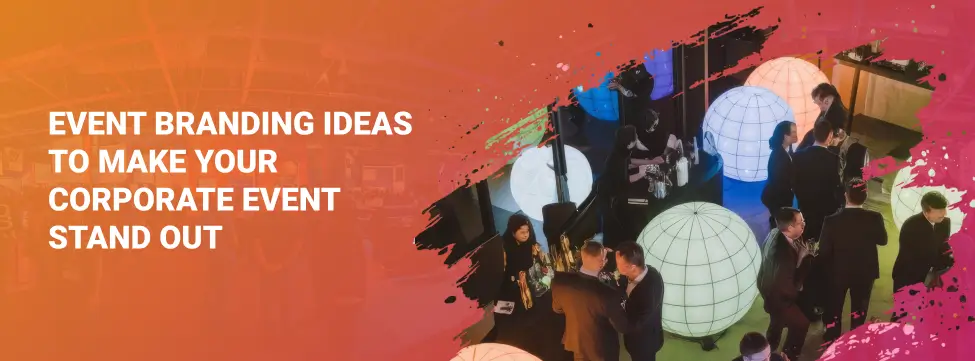
Event Branding Ideas to Make Your Corporate Event Stand Out
“Last year we hosted a corporate event for nearly 300 attendees. The speakers were great, the venue was premium, and everything ran on time… yet hardly anyone talked about the event afterward.”
If you have ever organized a corporate conference, product launch, or networking event, this situation might sound familiar. Many companies invest heavily in logistics, speakers, and catering, but still struggle to make their events memorable. The missing ingredient is often branding.
According to a report by EventMB, 74% of event attendees say branded experiences are the most memorable part of an event. Many corporate events still treat branding as an afterthought and something limited to banners and logo placements.
In reality, the events that stand out are those in which branding is woven into the entire experience. From the moment attendees arrive to the way they interact with content, every touchpoint reinforces the brand’s story.
This is where thoughtful event branding ideas come into play. Instead of simply displaying your logo, you create an immersive environment where attendees experience your brand in action.
But how exactly do you do that? Let’s walk through practical strategies.
Start With a Strong Event Theme That Guides Everything
Before thinking about signage, stage design, or digital displays, the most important step is defining a clear event theme. Without a theme, branding elements often feel scattered and disconnected.
Think of the theme as the foundation that shapes every visual and experiential decision.
For example, when Salesforce hosts its Dreamforce conference, the event always revolves around a clear concept, innovation, customer success, or digital transformation. Every element of the conference supports that narrative.
The stage visuals, booth experiences, networking lounges, and digital messaging all align with the same theme. Now imagine planning a corporate event without a theme.
- One area may feature formal branding while another uses completely different messaging or colors. Attendees might enjoy the event, but they won’t remember the brand story behind it.
So the first question to ask yourself is: What message should attendees remember when they leave the event?
For instance, if a cybersecurity company is hosting a conference on data protection, the theme could revolve around “Securing the Digital Future.”
Once the theme is clear, your branding ideas naturally start aligning around that narrative.
Make the Entrance an Experience, Not Just an Entry Point
The first few seconds of an event shape attendees’ expectations. Yet many corporate events overlook this moment.
Think about the last corporate event you attended. What did the entrance look like? Was it memorable, or just another registration desk with a banner behind it?
Now consider a real example from the Google Cloud Next conference. Instead of a simple entry, attendees walk through a large digital installation where screens display live cloud data visualizations and product innovations.
The experience immediately communicates what the brand stands for: technology, innovation, and scale. The lesson here is simple: the entrance should introduce the brand story immediately.
A financial technology company, for example, could design an entrance tunnel displaying milestones in digital payments, from cash transactions to modern AI-driven finance systems.
By the time attendees reach the registration desk, they have already experienced the brand’s journey. This approach turns a simple arrival moment into a powerful branding opportunity
Create Shareable Moments With Branded Photo Experiences
Today’s events don’t just happen inside a venue, they also unfold across social media. This makes shareable moments one of the most powerful event branding ideas available.
At the Adobe Summit, organizers created interactive art installations representing creativity and digital innovation. These installations became instant photo spots where attendees captured images and shared them online.
Within hours, social media feeds were filled with photos from the event, organically promoting the brand.
Why does this work so well? Because people love sharing experiences that look unique and visually appealing.
Imagine a marketing conference where a giant installation reads “Marketing is No Longer a Funnel, it is an Experience.” Attendees take photos with the installation, tag the event hashtag, and instantly spread brand visibility.
When designing these experiences, ask yourself: Would someone stop and take a picture here? If the answer is yes, you are creating branding that extends beyond the venue.
Turn Branding Into Interaction Instead of Decoration
Many events rely on static branding, such as banners, posters, and printed signage. While these are necessary, they rarely create engagement. Instead, modern events are shifting toward interactive branding experiences.
A great example comes from IBM Think, where attendees interact with AI-powered demos, touchscreen displays, and live data visualizations. Instead of simply telling people about technology, the event allows them to explore it themselves.
Let’s imagine a similar scenario for a SaaS company hosting a product launch event.
Rather than displaying product features on posters, the company installs interactive kiosks where attendees can test the product interface. Screens display real-time analytics showing how businesses improve productivity using the platform.
Now branding becomes an experience rather than a message. And that is exactly what makes an event memorable.
Design the Stage to Reflect Your Brand Story
The stage is often the most photographed part of a corporate event. Yet surprisingly, many events use generic stage backdrops.
If you look at large technology conferences like Apple’s product launch events, the stage design itself reflects the brand’s identity as minimalist, elegant, and focused on innovation.
The same principle applies to corporate events.
Consider a logistics company hosting a supply chain conference. Instead of a standard backdrop, the stage could incorporate dynamic visual graphics showing global supply chain routes, shipment flows, and logistics networks.
Every presentation then becomes part of a larger visual story. When attendees watch the speakers, they are simultaneously experiencing the brand’s expertise.
Ask yourself this question when designing the stage: Does the stage visually communicate what our company does? If the answer is yes, your branding is working effectively.
Transform Networking Areas Into Branded Experiences
Networking is one of the main reasons professionals attend corporate events. But networking spaces often look identical at every event like tables, chairs, and coffee stations.
What if these spaces also communicated your brand’s expertise?
For example, at a cybersecurity summit, organizers created networking lounges themed around different security challenges. One lounge focused on ransomware attacks, while another explored cloud security strategies.
Each lounge displayed relevant data, case studies, and real-world examples. Attendees could network while also learning about the brand’s industry knowledge. Suddenly, even casual conversations were happening within a branded environment.
This is one of the most overlooked event branding ideas, yet it can significantly enhance brand recall.
Personalize the Event Experience for Attendees
One of the most powerful ways to strengthen event branding is personalization. When attendees feel that an event is designed specifically for them, their emotional connection to the brand increases.
A great example comes from HubSpot’s INBOUND conference. Attendees receive personalized schedules through the event app, which recommends sessions based on their interests and industry roles.
This creates a tailored experience that makes the event feel highly relevant. Another example involves corporate leadership events where attendees receive welcome kits with personalized messages and customized notebooks.
These details may seem small, but they make attendees feel recognized. And when people feel valued, they remember the brand behind the experience.
Extend Branding Beyond the Venue
A corporate event should not end when attendees leave the venue. In fact, some of the most impactful branding happens after the event concludes.
Consider how companies like Microsoft handle post-event engagement. After major conferences, they release highlight videos, keynote summaries, and thought leadership content based on the event discussions.
These assets keep the event alive long after it ends. Similarly, a corporate marketing event could publish:
- A recap blog summarizing key insights
- Video interviews with speakers
- Social media highlight reels
- Industry reports based on session discussions
By doing this, the brand continues to deliver value even after the event concludes.
Conclusion
Corporate events are no longer just about logistics, agendas, and speakers. They are about creating memorable brand experiences.
When companies apply thoughtful event branding ideas, they transform ordinary events into immersive environments where attendees connect emotionally with the brand.
From the moment guests enter the venue to the conversations they have during networking sessions, every element contributes to the overall brand story.
So the next time you plan a corporate event, pause and ask yourself one question: Are we simply organising an event, or are we creating an experience people will remember?
The answer to that question will determine whether your event becomes just another gathering or a powerful brand moment.